- Body Parts Exercise Guides Body Fat Percentage Body Fat Estimation Caliper Table BMR Calculator
These exercises are mostly links and references to the www.bodybuilding.com website. Please check the original site for more detailed info and goodies.
Searching. Please wait...
Showing 286-300 of 1,081 items.
| Main Muscle Trained | Name | Alternate Names | Auxiliary Muscles | Equipment | Mechanics Type | Exercise Level | Sport | Force | Instructions | Alternative Exercises | Videos | External Url Info | Comments | |
|---|---|---|---|---|---|---|---|---|---|---|---|---|---|---|
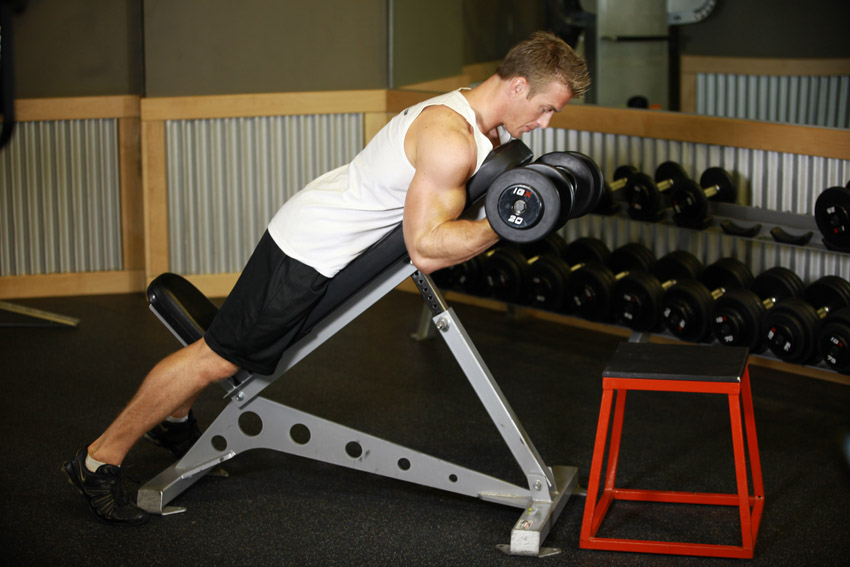 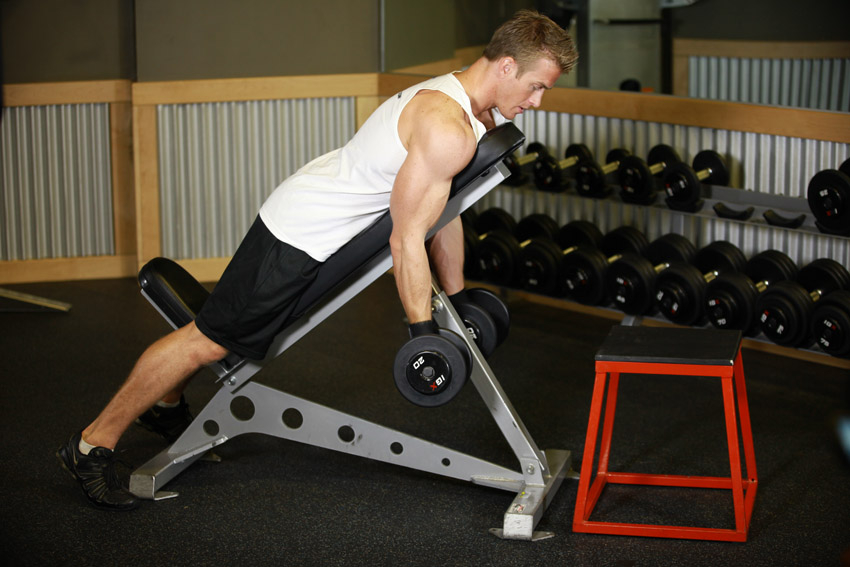 | 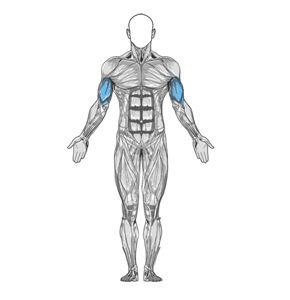 Biceps | Dumbbell Prone Incline Curl | (not set) | (not set) | 4 | 2 | Intermediate | 0 | Pull | 1) Grab a dumbbell on each hand and lie face down on an incline bench with your shoulders near top of the incline. Your knees can rest on the seat or your legs can be straddled to the sides (my preferred way).<br /> 2) Let your arms extend and hang naturally in front of you so that they are perpendicular to the floor.<br /> 3) Now keep your elbows in by your side and face the palms forward. This will be your starting position.<br /> 4) Raise the dumbbells by contracting the biceps until your arms are fully flexed. Exhale as you perform this portion of the movement and ensure that only the forearms move. The upper arms should remain stationary at all times.<br /> 5) Lower the dumbbells until your arms are fully extended.<br /> 6) Repeat for the recommended amount of times.<br /> <br /> Variations:<br /> You can perform using an e-z bar, a barbell or alternating arms. You can also use a cable machine as well. <br /> | Barbell Curls Lying Against An Incline/ / Concentration Curls/ / Preacher Curl | http://www.bodybuilding.com/exercises/detail/view/name/dumbbell-prone-incline-curl | ||
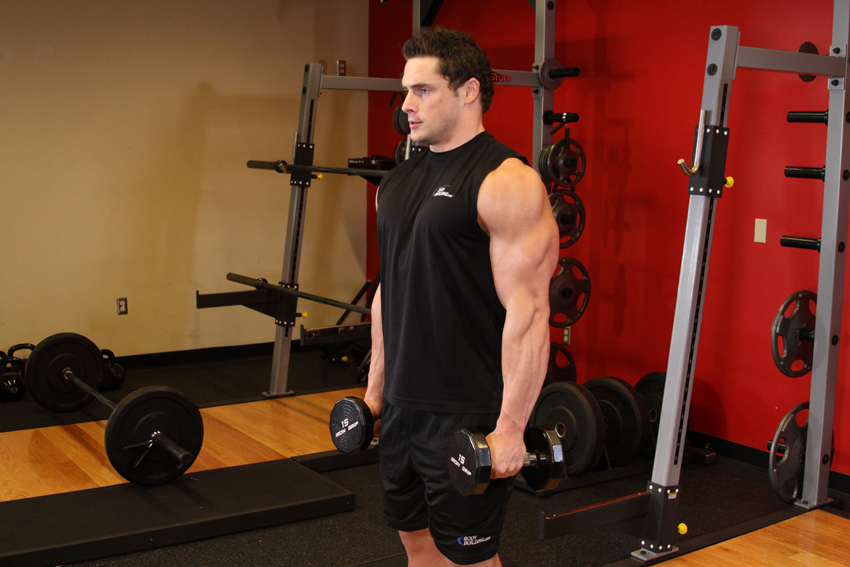 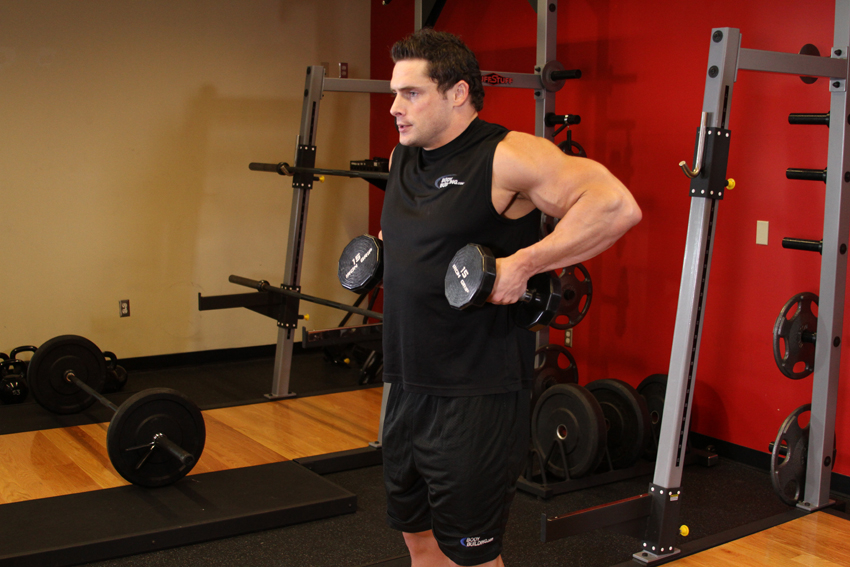 | 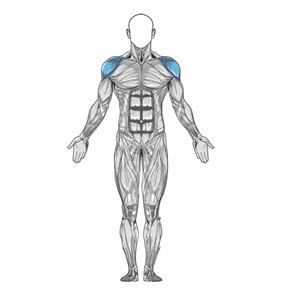 Shoulders | Dumbbell Raise | ["Dumbbell Upright Row"] | [3] | 4 | 1 | Beginner | 0 | Pull | 1) Grab a dumbbell in each arm and stand up straight with your arms extended by your sides with a slight bend at the elbows and your back straight. This will be your starting position. <br /> Tip:<br /> The dumbbell should be next to your thighs with the palm of your hands facing back.<br /> 2) Use your side shoulders to lift the dumbbells as you exhale. The dumbbells should be to the side of the body as you move them up. Continue to lift it until the dumbbells are nearly in line with your chin. <br /> Tip:<br /> Your elbows should drive the motion. As you lift the dumbbell, your elbow should always be higher than your forearm. Also, keep your torso stationary and pause for a second at the top of the movement.<br /> 3) Lower the dumbbells back down slowly to the starting position. Inhale as you perform this portion of the movement.<br /> 4) Repeat for the recommended amount of repetitions.<br /> <br /> Caution:<br /> Be very careful with how much weight you use in this exercise. Too much weight leads to bad form, which in turn can cause shoulder injury. I've seen this too many times so please no jerking, swinging and cheating. Also, if you suffer from shoulder problems, you may want to stay away from this movement and substitute by some form of lateral raises. <br /> <br /> Variations:<br /> This exercise can also be performed using a straight bar attached to a low pulley and it can also be performed using an e-z bar, cables and exercise band. <br /> | Dumbbell One-Arm Upright Row/ / Upright Barbell Row/ / Upright Cable Row | http://www.bodybuilding.com/exercises/detail/view/name/dumbbell-raise | ||
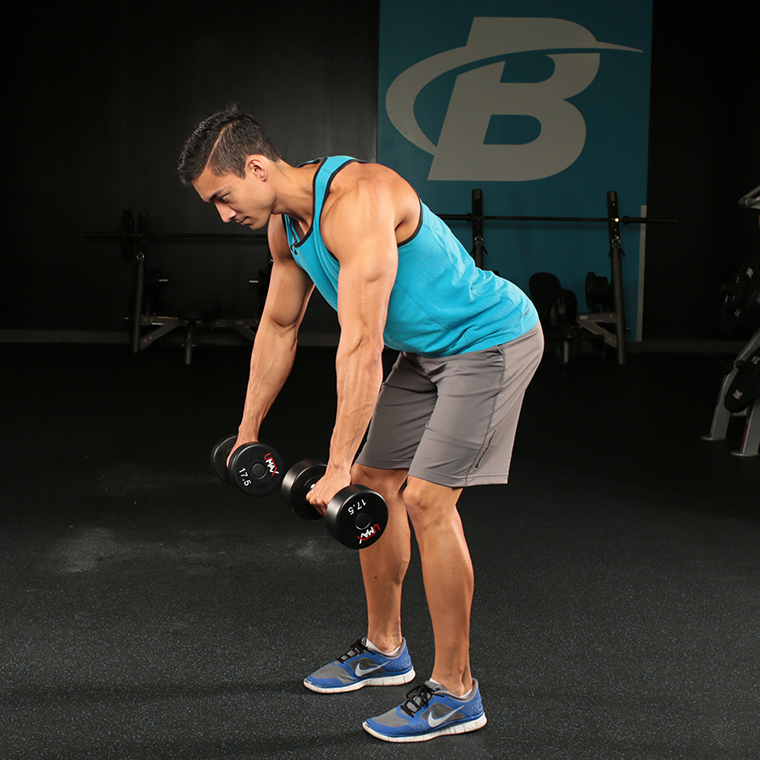 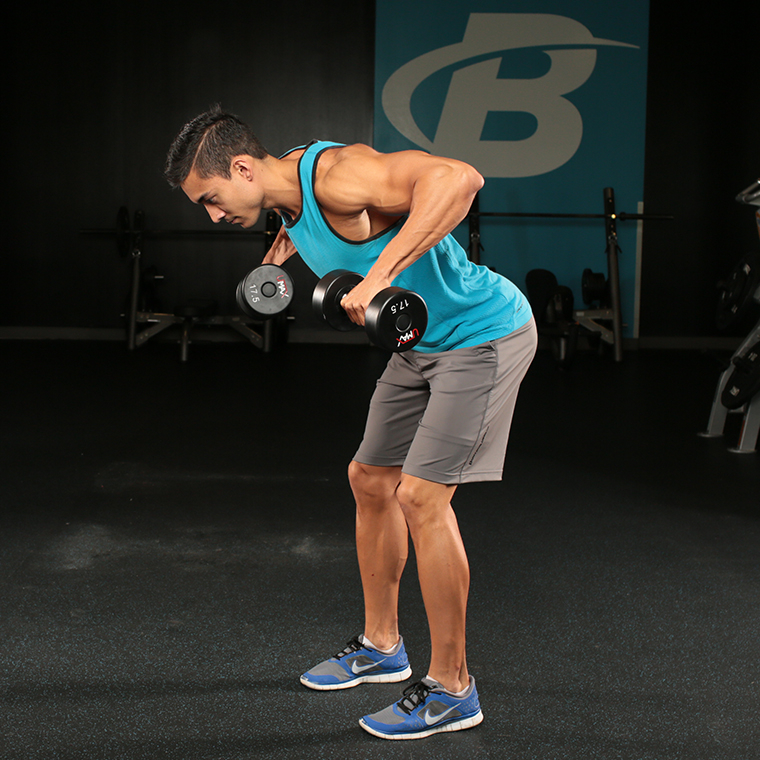 | 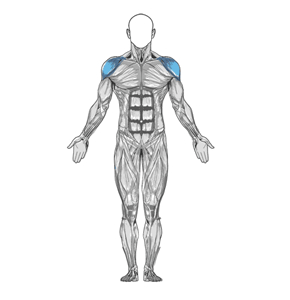 Shoulders | Dumbbell Rear Delt Row | (not set) | [3,10,12] | 4 | 1 | Beginner | 0 | Pull | 1) Begin in a standing position with a dumbbell in each hand. With the knees slightly bent, flex at the hip to lean forward. Ensure that your back is straight and stays that way for the duration of the exercise. Allow your arms to hang perpendicular to the floor, with the wrists pronated and the elbows pointed to your sides. This will be your starting position. <br /> 2) Initiate the movement by flexing the elbows and transversely extending the shoulder, rowing the dumbbells toward your torso. Your shoulders should stay retracted, squeezing your scapulae together throughout the movement. The upper arms should be perpendicular to your torso. <br /> 3) Continue the row until the elbows are inside of 90 degrees, contracting your shoulders as you pause at the top. <br /> 4) Return to the starting position, taking care to maintain both shoulder and spinal positioning. Repeat for the desired number of repetitions. <br /> | Barbell Rear Delt Row | http://www.bodybuilding.com/exercises/detail/view/name/dumbbell-rear-delt-row | ||
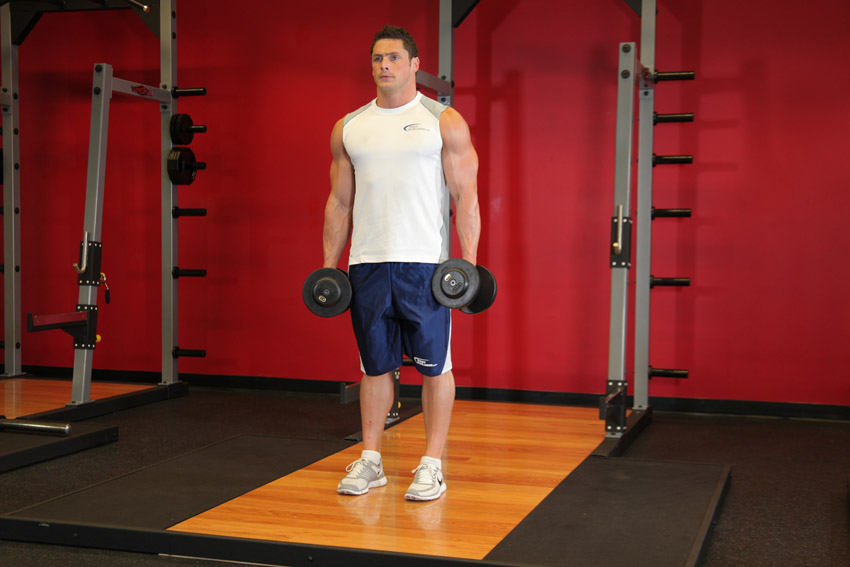 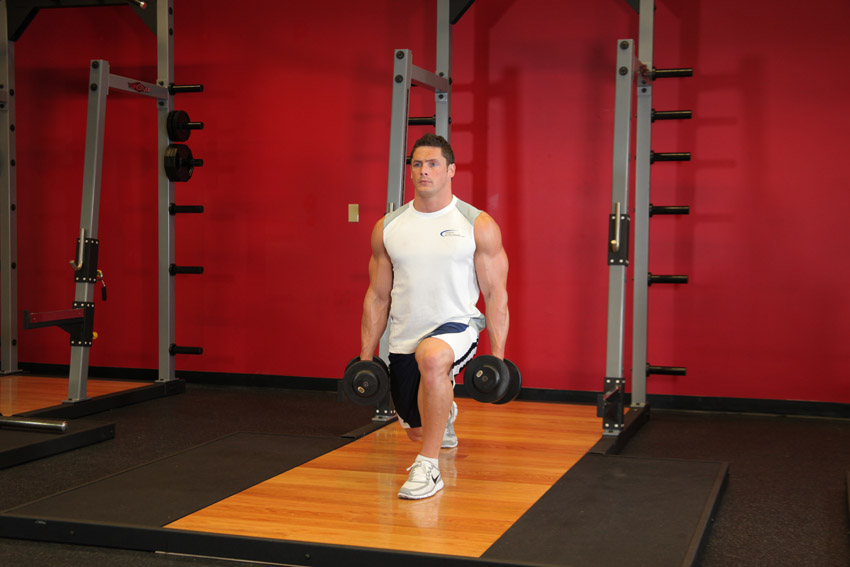 | 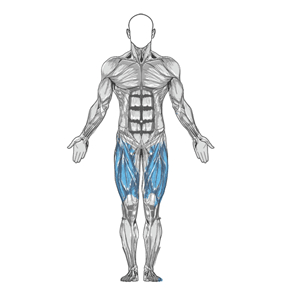 Quadriceps | Dumbbell Rear Lunge | (not set) | [6,8,9] | 4 | 1 | Intermediate | 0 | Push | 1) Stand with your torso upright holding two dumbbells in your hands by your sides. This will be your starting position.<br /> 2) Step backward with your right leg around two feet or so from the left foot and lower your upper body down, while keeping the torso upright and maintaining balance. Inhale as you go down. <br /> Tip:<br /> As in the other exercises, do not allow your knee to go forward beyond your toes as you come down, as this will put undue stress on the knee joint. Make sure that you keep your front shin perpendicular to the ground. Keep the torso upright during the lunge; flexible hip flexors are important. A long lunge emphasizes the Gluteus Maximus; a short lunge emphasizes Quadriceps.<br /> 3) Push up and go back to the starting position as you exhale. <br /> Tip:<br /> Use the ball of your feet to push in order to accentuate the quadriceps. To focus on the glutes, press with your heels.<br /> 4) Now repeat with the opposite leg.<br /> <br /> Variations:<br /> There are several ways to perform the exercise. You can do what I call a static lunge where your starting position is with one of your feet already forward. In this case, you just go up and down from that starting position until you are done with the recommended amount of repetitions. Then you switch legs and do the same. A more challenging version is the walking lunges where you walk across the room but in a lunging fashion. For walking lunges the leg being left back has to be brought forward after the lunging action has happened in order to continue moving ahead. This version is reserved for the most advanced athletes. <br /> Lunges can be performed with dumbbells as described above or with a barbell on the back, though the barbell variety is better suited for the advanced athletes who have mastered the exercise and no longer have balance issues. <br /> | Barbell Lunge/ / Dumbbell Lunges/ / Smith Single-Leg Split Squat | http://www.bodybuilding.com/exercises/detail/view/name/dumbbell-rear-lunge | ||
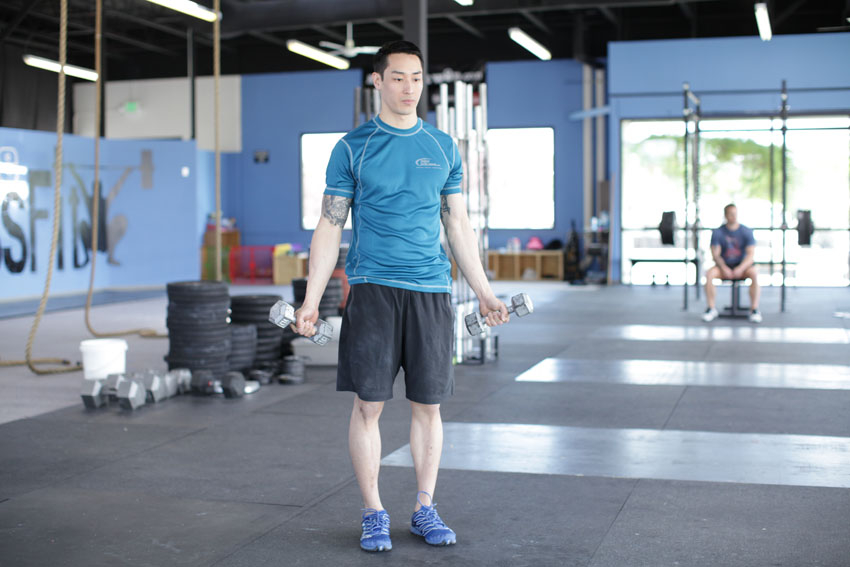 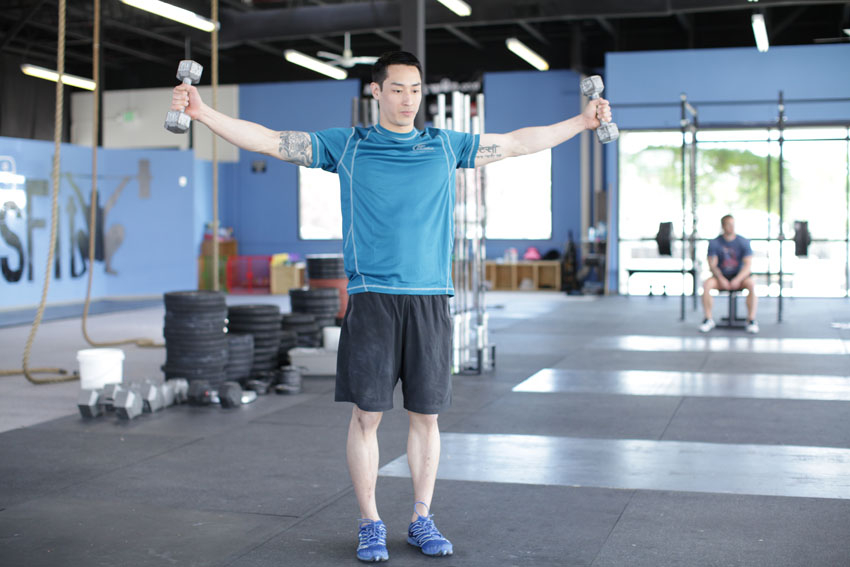 | 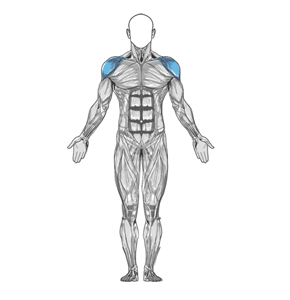 Shoulders | Dumbbell Scaption | (not set) | [15] | 4 | 2 | Beginner | 0 | Push | 1) This corrective exercise strengthens the muscles that stabilize your shoulder blade. Hold a light weight in each hand, hanging at your sides. Your thumbs should pointing up.<br /> 2) Begin the movement raising your arms out in front of you, about 30 degrees off center. Your arms should be fully extended as you perform the movement.<br /> 3) Continue until your arms are parallel to the ground, and then return to the starting position. <br /> | http://www.bodybuilding.com/exercises/detail/view/name/dumbbell-scaption | |||
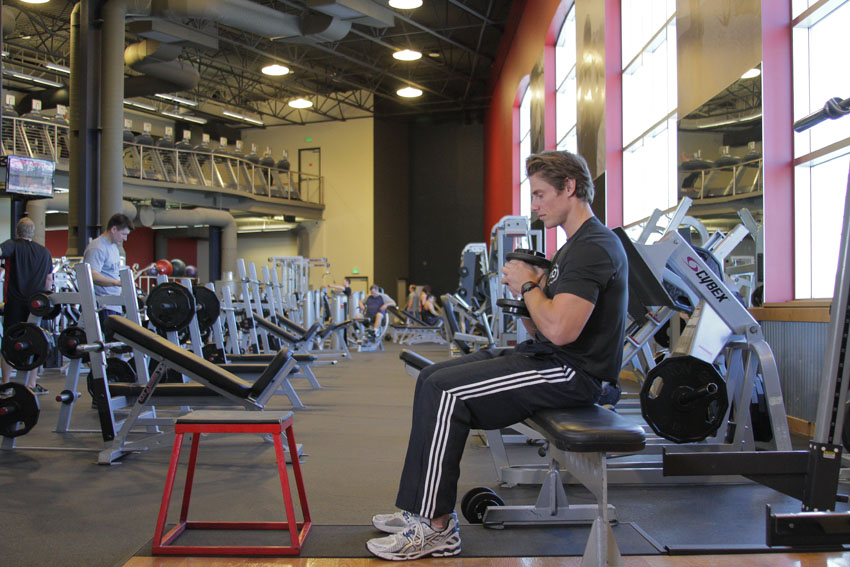 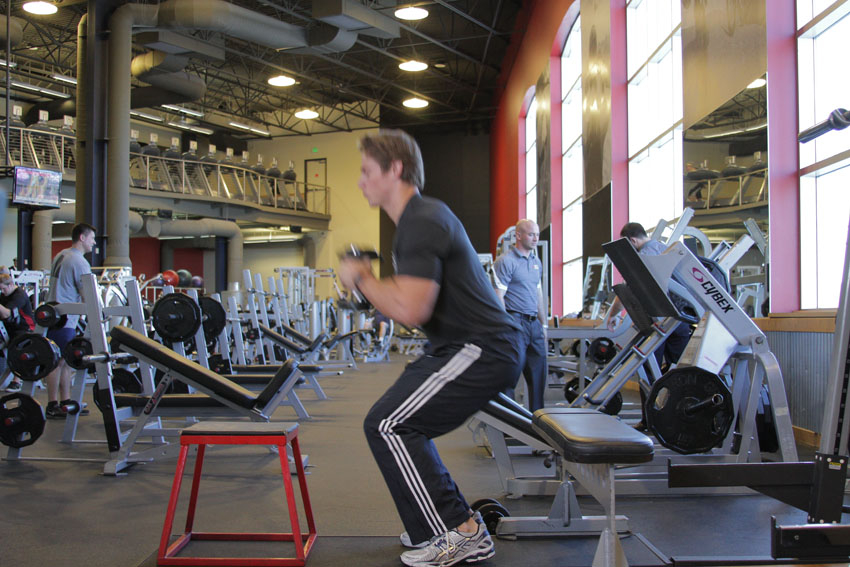 | 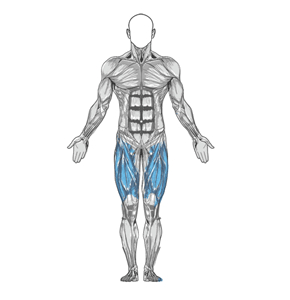 Quadriceps | Dumbbell Seated Box Jump | (not set) | [6,8,9] | 4 | 1 | Intermediate | 0 | Push | 1) Position a box a couple feet to the side of a bench. Hold a dumbbell to your chest with both hands and seat yourself on the bench facing the box. This will be your starting position.<br /> 2) Plant your feet firmly on the ground as you lean forward, extending through the hips and knees to jump up and forward.<br /> 3) Land on the box with both feet, absorbing the impact by allowing the hips and knees to bend.<br /> 4) Step down and return to the starting position.<br /> | http://www.bodybuilding.com/exercises/detail/view/name/dumbbell-seated-box-jump | |||
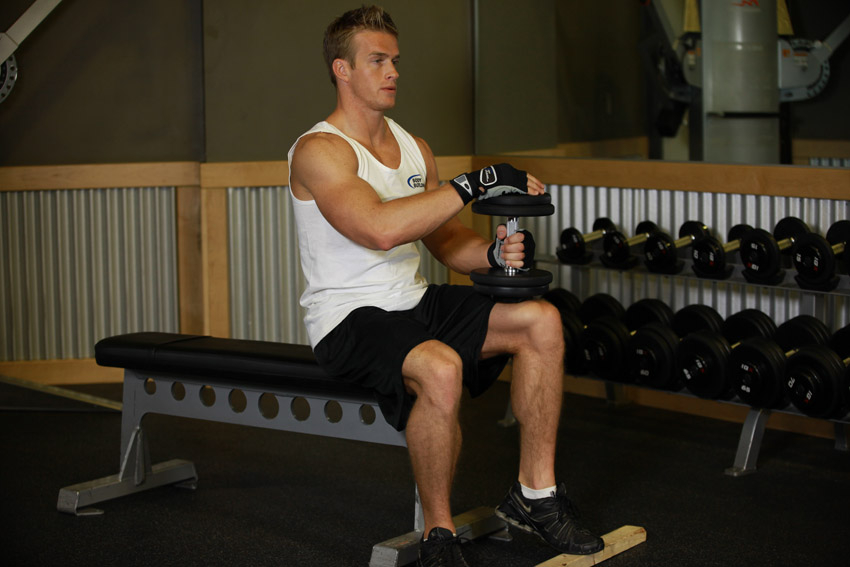 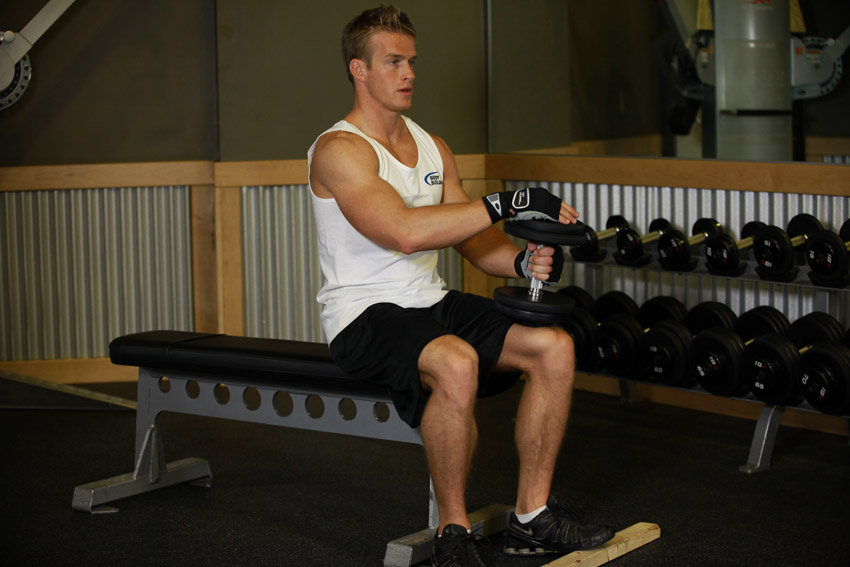 | 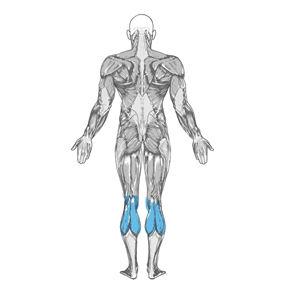 Calves | Dumbbell Seated One-Leg Calf Raise | ["Dumbbell Seated Calf Raise"] | (not set) | 4 | 2 | Beginner | 0 | Push | 1) Place a block on the floor about 12 inches from a flat bench.<br /> 2) Sit on a flat bench and place a dumbbell on your upper left thigh about 3 inches above your knee.<br /> 3) Now place the ball of your left foot on the block. This will be your starting position.<br /> 4) Raise your toes up as high as possible as you exhale and you contract your calf muscle. Hold the contraction for a second.<br /> 5) Slowly return to the starting position, stretching as far down as possible.<br /> 6) Repeat for your prescribed number of repetitions and then repeat with the right leg.<br /> <br /> Variations:<br /> You can perform this exercise also with both legs at the same time as well as using a seated calf raise machine. <br /> | Seated Calf Raise/ / Barbell Seated Calf Raise | http://www.bodybuilding.com/exercises/detail/view/name/dumbbell-seated-one-leg-calf-raise | ||
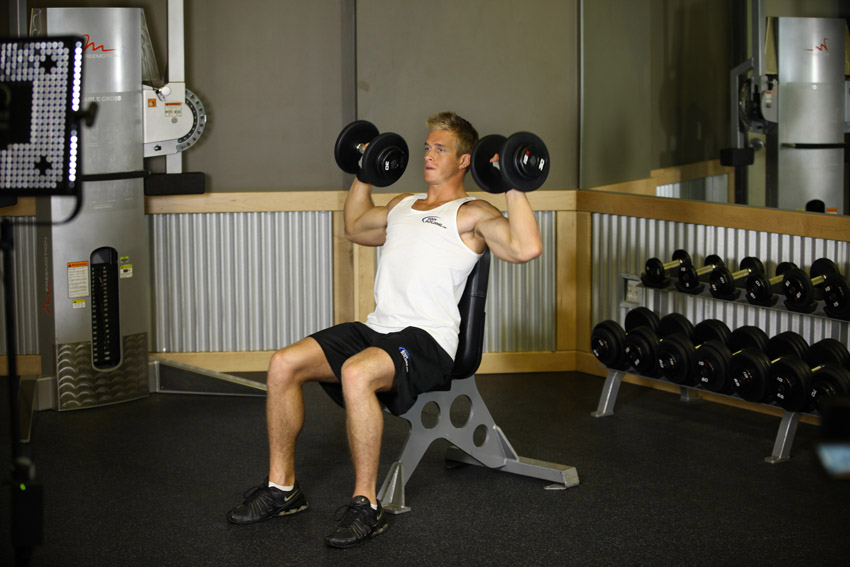 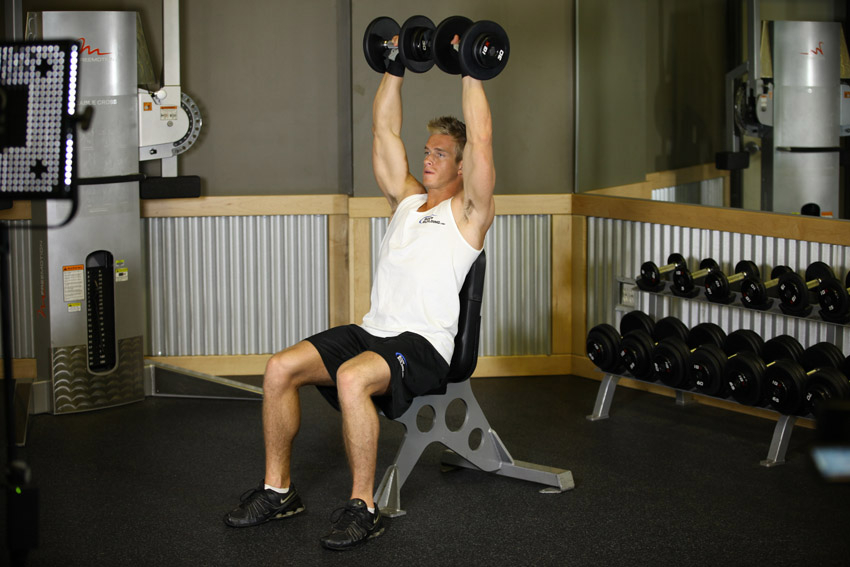 | 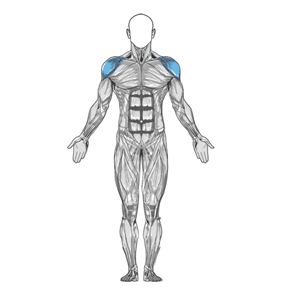 Shoulders | Dumbbell Shoulder Press | (not set) | [2] | 4 | 1 | Intermediate | 0 | Push | 1)While holding a dumbbell in each hand, sit on a military press bench or utility bench that has back support. Place the dumbbells upright on top of your thighs.<br /> 2)Now raise the dumbbells to shoulder height one at a time using your thighs to help propel them up into position.<br /> 3)Make sure to rotate your wrists so that the palms of your hands are facing forward. This is your starting position.<br /> 4)Now, exhale and push the dumbbells upward until they touch at the top.<br /> 5)Then, after a brief pause at the top contracted position, slowly lower the weights back down to the starting position while inhaling.<br /> 6)Repeat for the recommended amount of repetitions.<br /> <br /> Variations:<br /> You can perform the exercise standing or sitting on a regular flat bench. For people with lower back problems, the version described is the recommended one.<br /> You can also perform the exercise as Arnold Schwarzenegger used to do it, which is to start holding the dumbbells with a supinated grip (palms facing you) in front of your shoulders and then, as you start pushing up, you align the dumbbells in the starting position described on step 3 by rotating your wrists and touch the dumbbells at the top. As you come down, then you would go back to the starting position by rotating the wrist throughout the lowering portion until the palms of your hands are facing you. This variation is called the Arnold Press. However, it is not recommended if you have rotator cuff problems.<br /> | Machine Shoulder (Military) Press | http://www.bodybuilding.com/exercises/detail/view/name/dumbbell-shoulder-press | ||
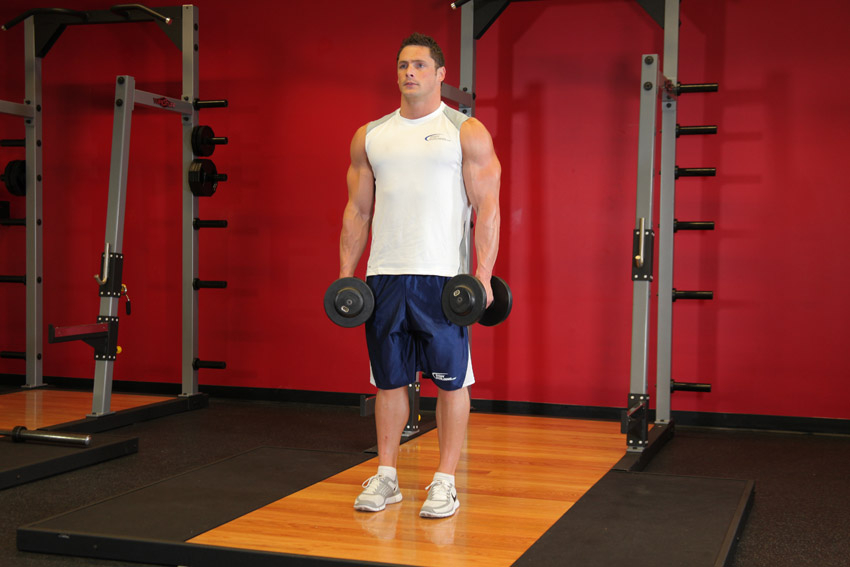 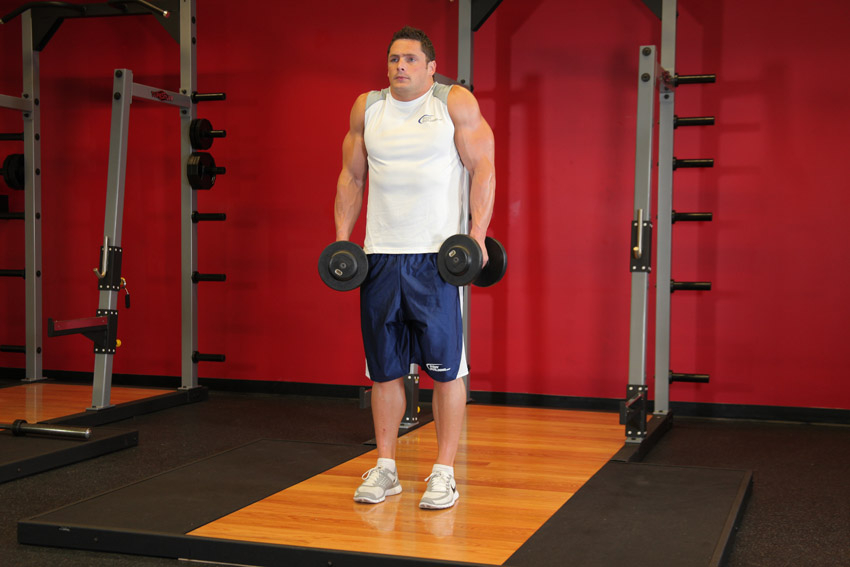 | 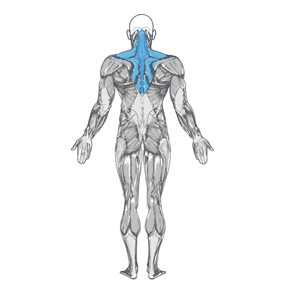 Traps | Dumbbell Shrug | (not set) | (not set) | 4 | 2 | Beginner | 0 | Pull | 1) Stand erect with a dumbbell on each hand (palms facing your torso), arms extended on the sides.<br /> 2) Lift the dumbbells by elevating the shoulders as high as possible while you exhale. Hold the contraction at the top for a second. <br /> Tip:<br /> The arms should remain extended at all times. Refrain from using the biceps to help lift the dumbbells. Only the shoulders should be moving up and down.<br /> 3) Lower the dumbbells back to the original position.<br /> 4) Repeat for the recommended amount of repetitions.<br /> <br /> Variations:<br /> You can perform this exercise with bands, barbells or cables. You can also use a single handle and work one side at a time. <br /> | Barbell Shrug/ / Barbell Shrug Behind The Back/ / Cable Shrugs | http://www.bodybuilding.com/exercises/detail/view/name/dumbbell-shrug | ||
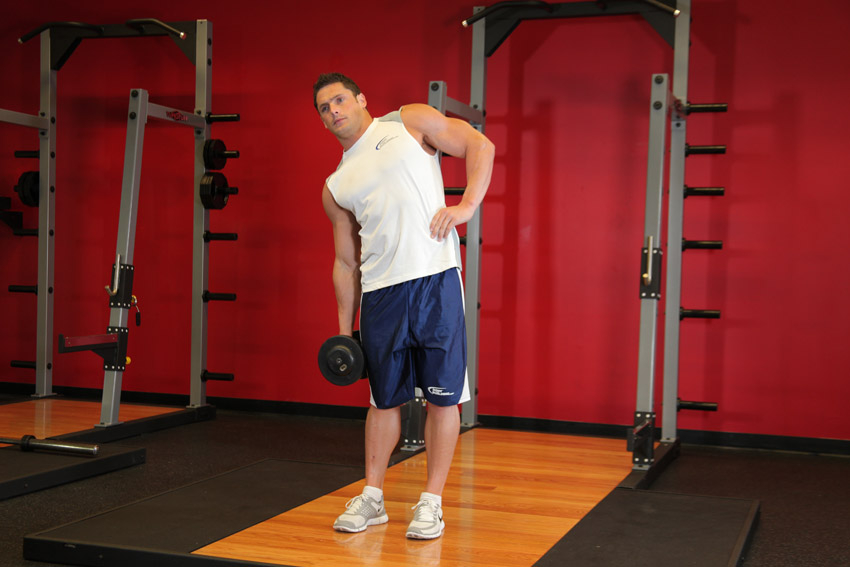 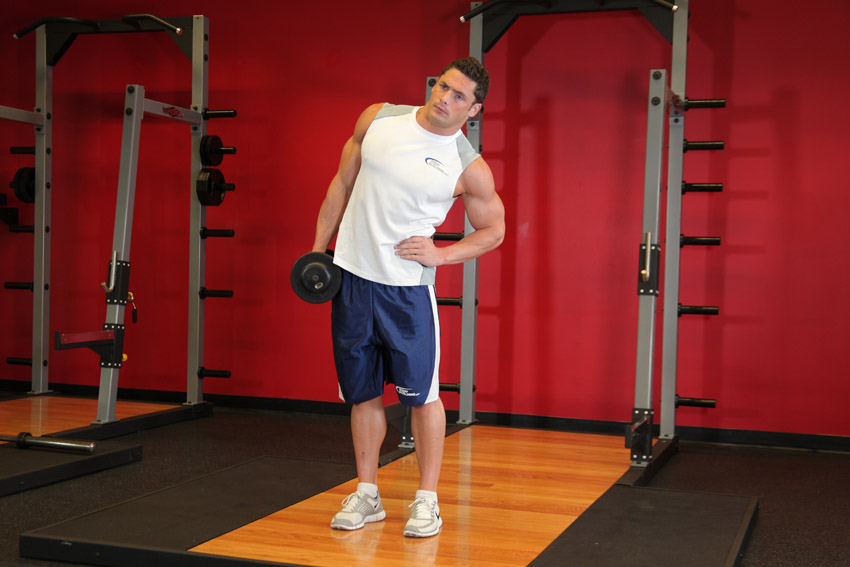 | 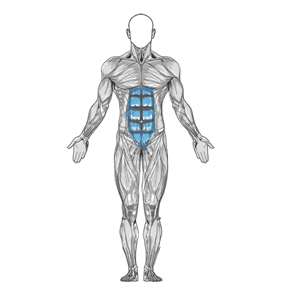 Abdominals | Dumbbell Side Bend | (not set) | (not set) | 4 | 2 | Beginner | 0 | Pull | 1) Stand up straight while holding a dumbbell on the left hand (palms facing the torso) as you have the right hand holding your waist. Your feet should be placed at shoulder width. This will be your starting position.<br /> 2) While keeping your back straight and your head up, bend only at the waist to the right as far as possible. Breathe in as you bend to the side. Then hold for a second and come back up to the starting position as you exhale. <br /> Tip:<br /> Keep the rest of the body stationary.<br /> 3) Now repeat the movement but bending to the left instead. Hold for a second and come back to the starting position.<br /> 4) Repeat for the recommended amount of repetitions and then change hands.<br /> <br /> Caution:<br /> Refrain from using this exercise if your obliques tend to grow easily as wide obliques take away from your symmetry. <br /> <br /> Variations:<br /> You can also do this exercise while seating on a bench or with a barbell. <br /> | Alternate Heel Touchers/ / Side Bridge/ / Weighted Ball Side Bend | http://www.bodybuilding.com/exercises/detail/view/name/dumbbell-side-bend | ||
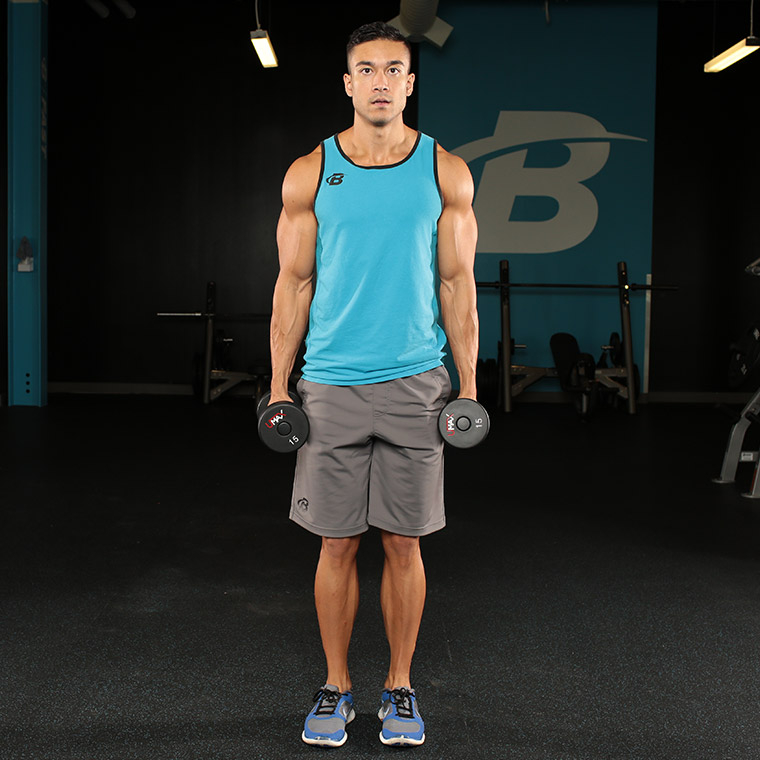 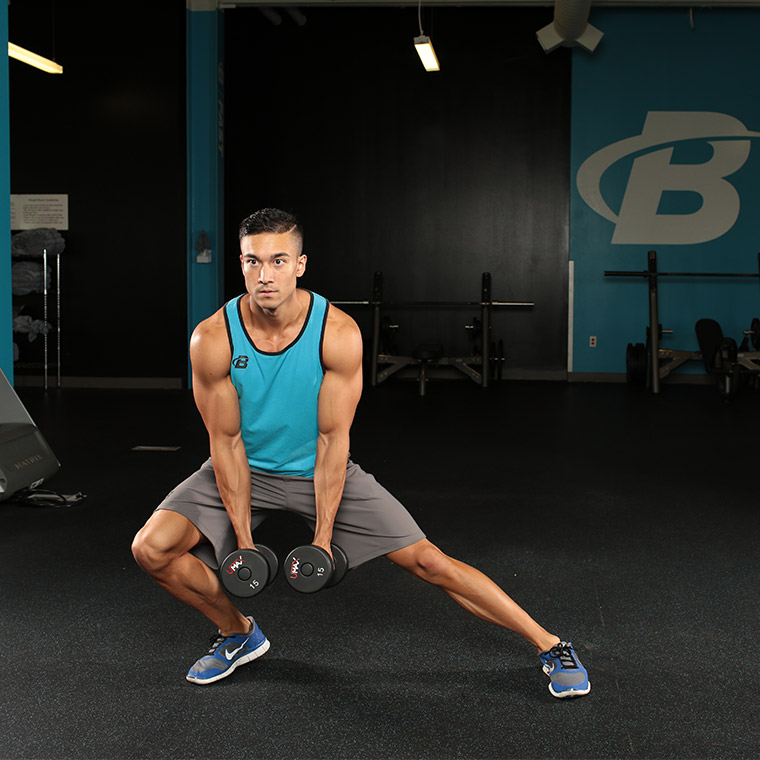 | 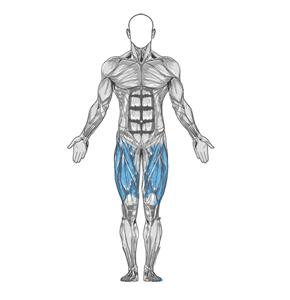 Quadriceps | Dumbbell Side Lunge | (not set) | [16,8,9] | 4 | 1 | Beginner | 0 | Push | 1) Stand erect with your feet about shoulder-width apart holding a pair of light-weight dumbbells together in front of you, palms facing in. Your chest should be out, shoulders back, and knees unlocked. Maintain the natural curvature in your back. This is your start position. <br /> 2) Facing forward throughout and staying as upright as possible, take a big step out to your side, angling your foot just slightly out. Descend into a moderately deep squat, keeping the your trailing leg straight. <br /> 3) Push back up and bring your leg back to the start position. <br /> 4) Repeat to the opposite side and complete the desired number of repetitions. <br /> | http://www.bodybuilding.com/exercises/detail/view/name/dumbbell-side-lunge | |||
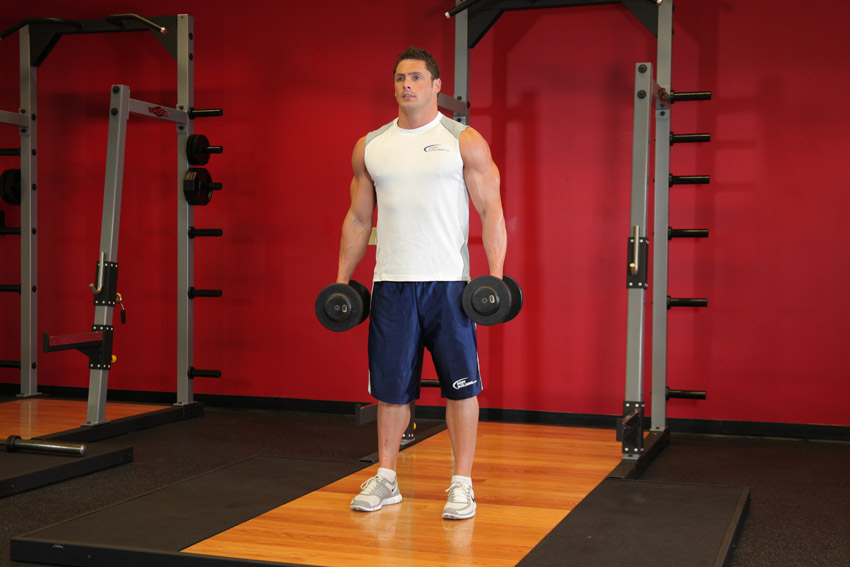 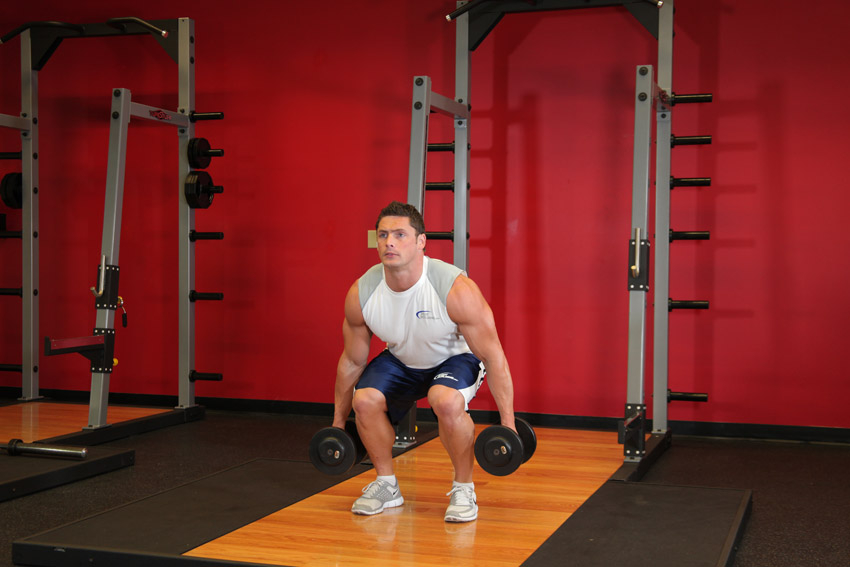 | 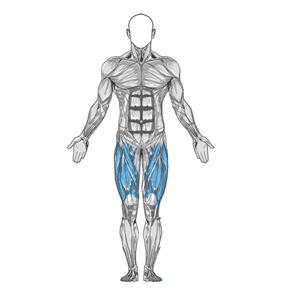 Quadriceps | Dumbbell Squat | (not set) | [6,8,9,11] | 4 | 1 | Beginner | 0 | Push | 1) Stand up straight while holding a dumbbell on each hand (palms facing the side of your legs).<br /> 2) Position your legs using a shoulder width medium stance with the toes slightly pointed out. Keep your head up at all times as looking down will get you off balance and also maintain a straight back. This will be your starting position. <br /> Note:<br /> For the purposes of this discussion we will use the medium stance described above which targets overall development; however you can choose any of the three stances discussed in the foot stances section.<br /> 3) Begin to slowly lower your torso by bending the knees as you maintain a straight posture with the head up. Continue down until your thighs are parallel to the floor. <br /> Tip:<br /> If you performed the exercise correctly, the front of the knees should make an imaginary straight line with the toes that is perpendicular to the front. If your knees are past that imaginary line (if they are past your toes) then you are placing undue stress on the knee and the exercise has been performed incorrectly.<br /> 4) Begin to raise your torso as you exhale by pushing the floor with the heel of your foot mainly as you straighten the legs again and go back to the starting position.<br /> 5) Repeat for the recommended amount of repetitions.<br /> <br /> Caution:<br /> Be cautious with the weight used; in case of doubt, use less weight rather than more. The squat is a very safe exercise but only if performed properly. You may use wrist wraps for this exercise. <br /> <br /> Variations:<br /> As previously mentioned, there are various stances that can be used depending on what you want to emphasize. <br /> You can also use a barbell for this exercise. <br /> | Front Barbell Squat/ / Freehand Jump Squat/ / Plie Dumbbell Squat | http://www.bodybuilding.com/exercises/detail/view/name/dumbbell-squat | ||
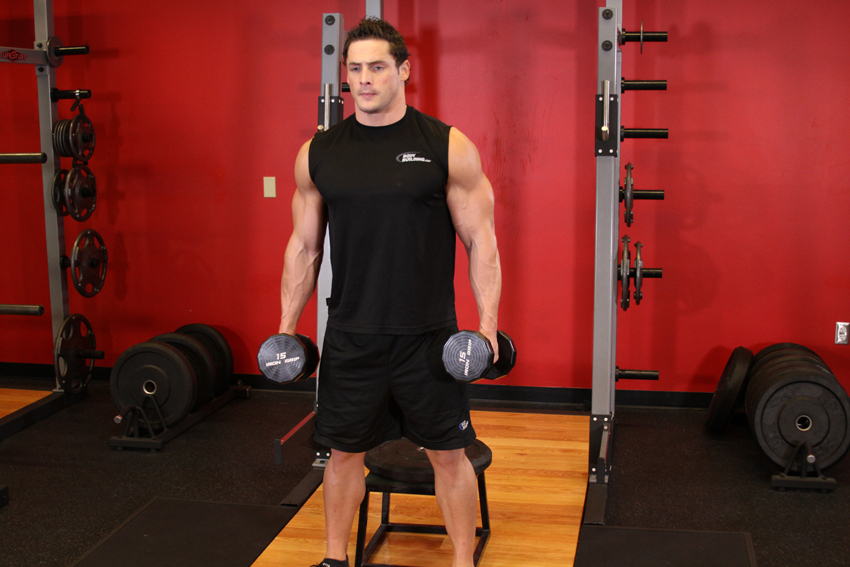 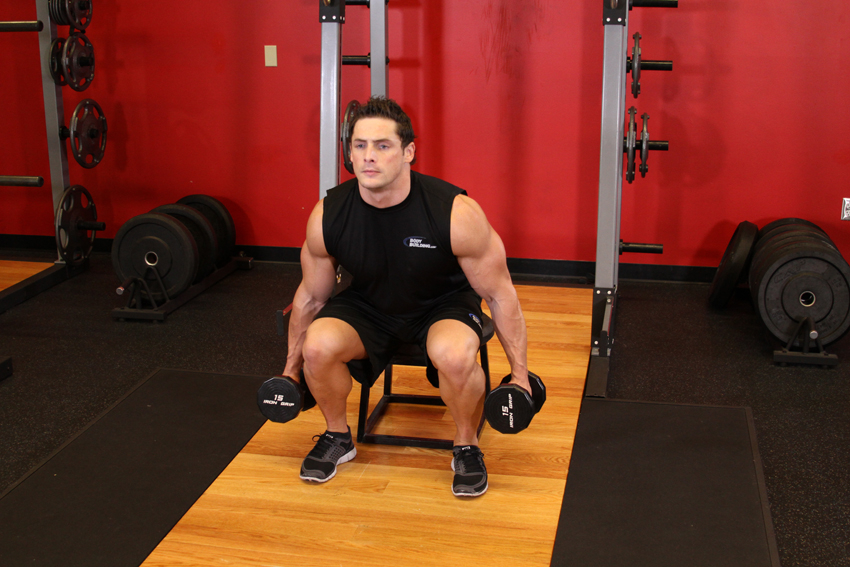 | 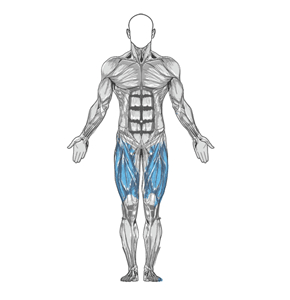 Quadriceps | Dumbbell Squat To A Bench | (not set) | [6,8,9,11] | 4 | 1 | Intermediate | 0 | Push | 1) Stand up straight with a flat bench behind you while holding a dumbbell on each hand (palms facing the side of your legs).<br /> 2) Position your legs using a shoulder width medium stance with the toes slightly pointed out. Keep your head up at all times as looking down will get you off balance and also maintain a straight back. This will be your starting position. <br /> Note:<br /> For the purposes of this discussion we will use the medium stance described above which targets overall development; however you can choose any of the three stances discussed in the foot stances section.<br /> 3) Begin to slowly lower your torso by bending the knees as you maintain a straight posture with the head up. Continue down until you slightly touch the bench behind you. Inhale as you perform this portion of the movement. <br /> Tip:<br /> If you performed the exercise correctly, the front of the knees should make an imaginary straight line with the toes that is perpendicular to the front. If your knees are past that imaginary line (if they are past your toes) then you are placing undue stress on the knee and the exercise has been performed incorrectly.<br /> 4) Begin to raise the bar as you exhale by pushing the floor with the heel of your foot mainly as you straighten the legs again and go back to the starting position.<br /> 5) Repeat for the recommended amount of repetitions.<br /> <br /> Caution:<br /> Be cautious with the weight used; in case of doubt, use less weight rather than more. The squat is a very safe exercise but only if performed properly. You may use wrist wraps for this exercise. <br /> <br /> Variations:<br /> As previously mentioned, there are various stances that can be used depending on what you want to emphasize. <br /> You can also place a small block under the heels to improve balance. <br /> You can also use a barbell for this exercise. Another way to perform these is by using a smith machine though I do not recommend this. The reason for not performing regular squats on the smith machine is that since the machine allows you to execute the exercise while leaning versus the bar, hip flexor involvement is minimized taking the hamstring out of the exercise. While this does take pressure off the lower back, hamstring involvement is a requirement to stabilize the knee-cap. So, as a result, what is created is a situation where destructive forces place a huge stress on the ACL (anterior cruciate ligament; a primary ligament in the knee capsule whose job is to provide knee stability) by pushing the knee-cap forward. For this reason, I highly recommend against smith machine use for squats and if you still insist on doing so, make sure it is a sporadic use rather than frequent, and also be sure to control the amount of weight used. <br /> | http://www.bodybuilding.com/exercises/detail/view/name/dumbbell-squat-to-a-bench | |||
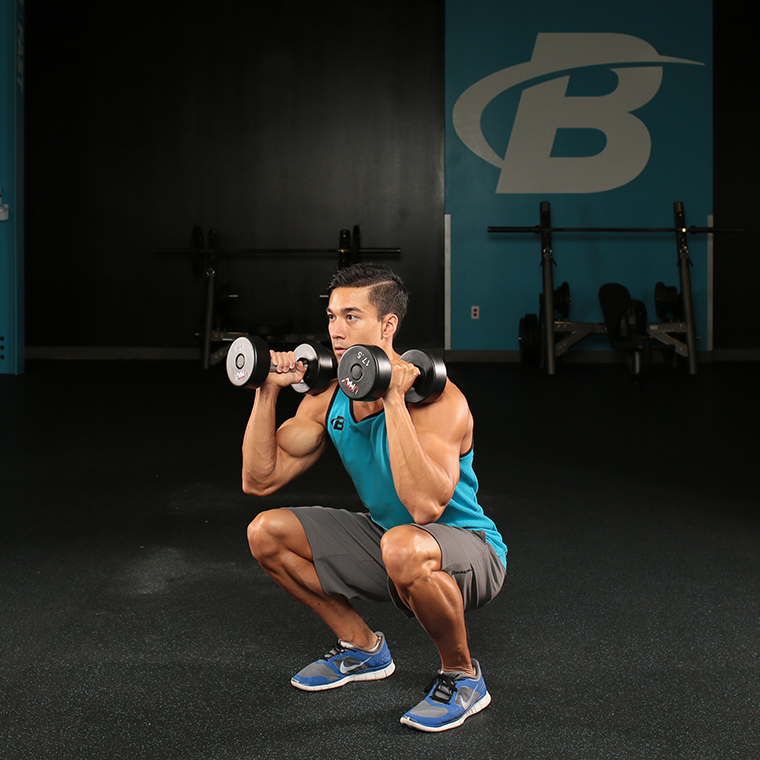 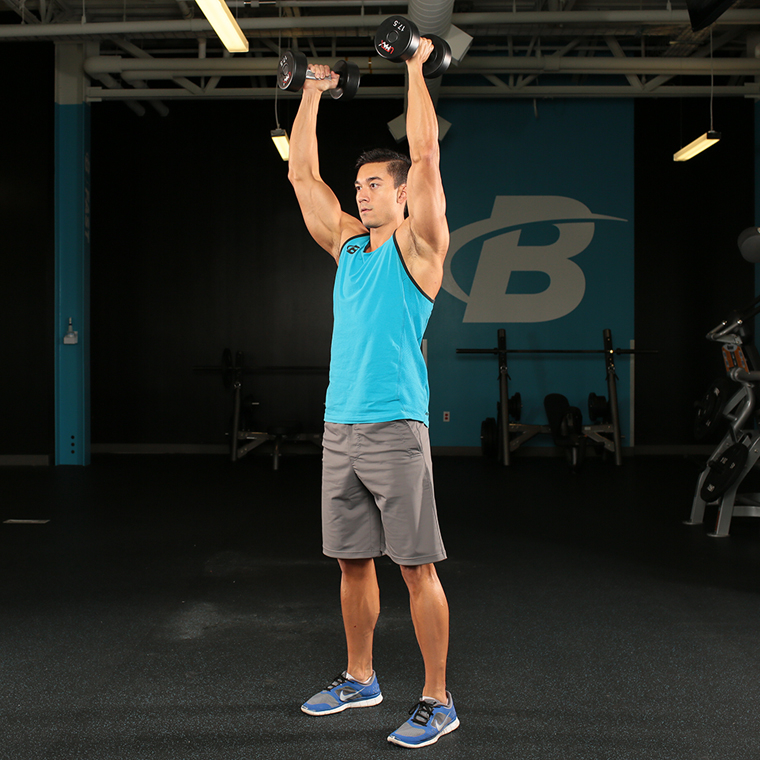 | 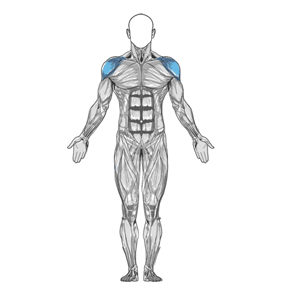 Shoulders | Dumbbell Squat To Shoulder Press | (not set) | [8,9,14,15] | 4 | 1 | Intermediate | 0 | Push | 1) Begin in a standing position with a dumbbell in each hand. Clean the dumbbells to shoulder height utilizing a jumping motion and shoulder rotation. Your palms should be facing each other and the elbows pointed forward. Look directly forward, keep your chest up, and place your feet about shoulder-width apart. This will be your starting position. <br /> 2) Initiate the movement with a squat, flexing the knees and hips to lower your body. Descend as far as flexibility allows, maintaining good posture in the spine, hips, and knees. <br /> 3) Pause for a brief moment at the bottom of the squat before returning to a standing position by extending the hips and knees. <br /> 4) After fully rising to a standing position, press the weights overhead by extending the elbows and flexing at the shoulder. <br /> 5) Return the weights to the shoulder before repeating the entire movement for additional repetitions. <br /> | Push Press | http://www.bodybuilding.com/exercises/detail/view/name/dumbbell-squat-to-shoulder-press | ||
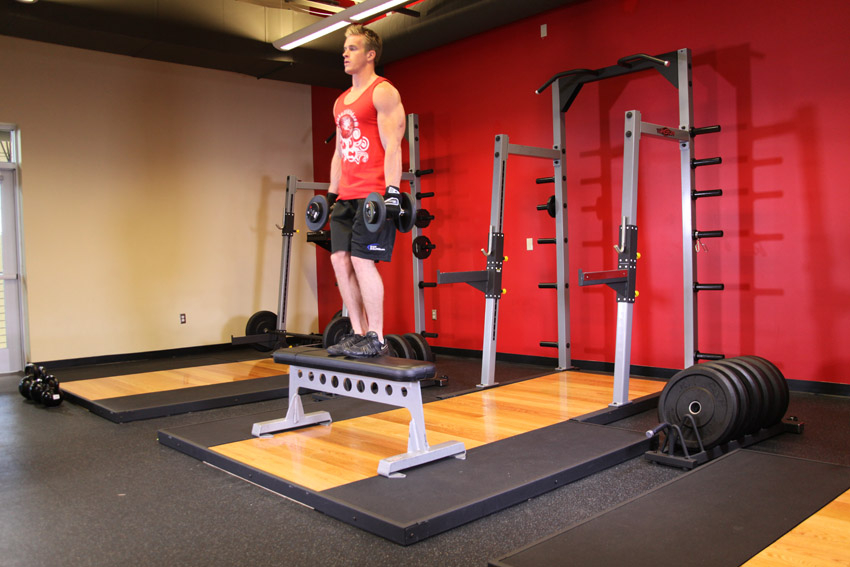 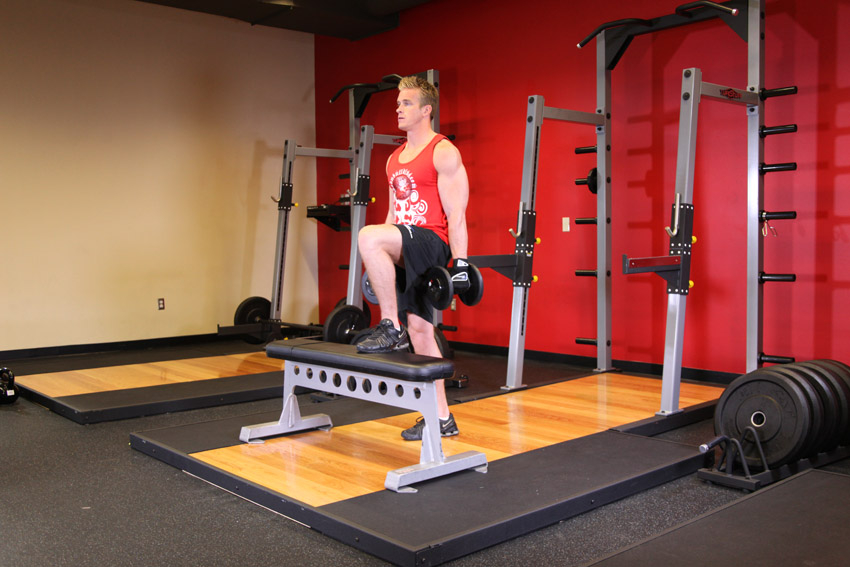 | 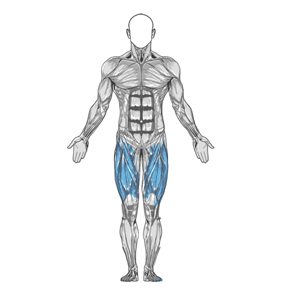 Quadriceps | Dumbbell Step Ups | (not set) | [6,8,9] | 4 | 1 | Intermediate | 0 | Push | 1) Stand up straight while holding a dumbbell on each hand (palms facing the side of your legs).<br /> 2) Place the right foot on the elevated platform. Step on the platform by extending the hip and the knee of your right leg. Use the heel mainly to lift the rest of your body up and place the foot of the left leg on the platform as well. Breathe out as you execute the force required to come up.<br /> 3) Step down with the left leg by flexing the hip and knee of the right leg as you inhale. Return to the original standing position by placing the right foot of to next to the left foot on the initial position.<br /> 4) Repeat with the right leg for the recommended amount of repetitions and then perform with the left leg.<br /> <br /> Note:<br /> This is a great exercise for people with lower back problems that are unable to do stiff legged deadlifts. <br /> <br /> Variations:<br /> Just like lunges, this exercise can also be performed by alternating between the right and the left leg every time until all repetitions have been performed for both legs. Also, a barbell can be used for resistance. Beginners can start with only the bodyweight, especially if they have balance issues. <br /> | Barbell Lunge/ / Barbell Step Ups | http://www.bodybuilding.com/exercises/detail/view/name/dumbbell-step-ups |
Play Video
Loading, please wait...